29.06.2026
News
How Sustainable Packaging Solutions Work in Industry, Too
Sustainability is no longer an issue that affects only the consumer goods sector. Industrial companies, too, face the challenge of making their processes more resource-efficient, reducing emissions, and remaining economically viable at the same time. In this context, packaging is increasingly coming into focus. This is because packaging accompanies products throughout the entire supply chain and influences not only material usage but also transportation costs, storage capacity, and CO₂ emissions.
However, many companies wonder whether sustainable packaging solutions can actually meet the industry’s high standards. The answer is yes. Modern packaging concepts show that sustainability and safety [OF1.1] do not have to be mutually exclusive.
Why Sustainable Packaging Is Becoming Increasingly Important for Industrial Companies
Industrial companies are under growing pressure to demonstrably achieve their sustainability goals. Customers, investors, and regulators increasingly expect transparency regarding the environmental footprint of products and supply chains.
At the same time, reporting requirements are becoming more stringent. Issues such as the Corporate Sustainability Reporting Directive (CSRD), ESG criteria, and the Supply Chain Due Diligence Act make it clear that sustainability is now a key component of corporate strategy.
Packaging offers significant potential in this regard. Even small optimizations can noticeably reduce material consumption, shipping weight, and emissions. At the same time, processes can be made more efficient and costs can be lowered.
What are sustainable packaging solutions?
What matters most is taking a holistic view. Packaging is considered sustainable if it uses as little material as possible, can be reused or recycled, and at the same time fulfills its actual purpose: the safe protection of the goods being transported. It is precisely these requirements that are coming into sharper focus as a result of the Packaging and Packaging Waste Regulation (PPWR). Among other things, the EU regulation sets requirements for minimizing packaging, ensuring recyclability, and increasing the use of reusable packaging. For industrial companies, this means that in the future, packaging must be developed not only to be economical and safe, but also with the entire life cycle in mind.
In the industrial sector, this primarily means:
- Reducing material usage
- Using renewable raw materials
- Reusable packaging systems
- Optimized transport and warehouse logistics
- Improved recyclability
Special Requirements for Industrial Packaging
Industrial goods place significantly higher demands on packaging than traditional consumer products. Machines, equipment, spare parts, and heavy goods are often very heavy, have delicate surfaces, or feature complex geometries.
Packaging must therefore do much more than simply facilitate transport. It protects against moisture, vibrations, corrosion, and mechanical stress. Particularly in the export sector, international regulations and insurance requirements must also be taken into account.
Sustainability must never come at the expense of safety. However, modern packaging solutions demonstrate that both goals can be successfully combined.
How Sustainable Packaging Solutions Work in Practice
The most important factor often lies not in the material itself, but in intelligent packaging design.
For safety reasons, many packages are designed to be larger or heavier than is actually necessary. Through precise analysis of the contents, the amount of material used and the weight of the packaging can often be significantly reduced without compromising protection.
Digital solutions also support this approach. Modern measurement and planning tools enable packaging to be precisely tailored to the specific goods being transported. As a result, only as much material is used as is actually needed.
Another important approach is reuse. Instead of disposing of packaging after a single use, it is designed to withstand multiple transport cycles. This significantly reduces raw material consumption.
Sustainable Packaging Solutions Put to the Test
Case Study: Industrial Packaging Made from Recycled Beverage Cartons
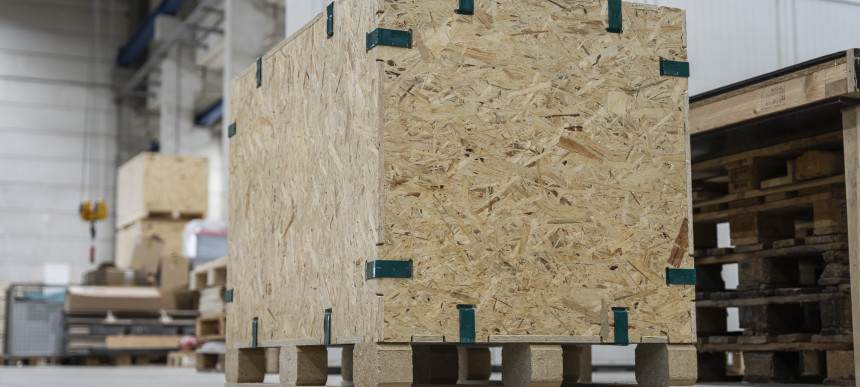
Sustainable packaging solutions are created not only through the use of proven materials, but also through the development of new materials. In a case study, AXXUM is investigating whether panels made from recycled beverage cartons can replace traditional wood-based materials in industrial packaging.
To this end, various packaging sizes are being tested under real-world conditions. The airtight, heat-sealed packages are stored outdoors for an extended period and must withstand moisture, temperature fluctuations, and mechanical stress.
The results so far show that the material has high moisture resistance as well as good mechanical and thermal stability. Its workability also proves to be comparable to that of traditional wood-based materials such as OSB. Sawing, screwing, nailing, and stapling are all possible without any problems.
At the same time, challenges are also becoming apparent in the field tests. Due to the higher material density, the packaging is heavier than comparable plywood boxes. In addition, swelling occurs at the cut edges, and a characteristic odor of the material has been detected.
Long-term testing is ongoing. The goal is to further optimize the material and assess, over the long term, whether recycled beverage cartons can serve as a sustainable alternative for industrial packaging solutions.
What sustainable packaging solutions are available for the industry?
Depending on the requirements, different packaging concepts are used.
Wooden Packaging from Sustainable Forestry
Wood is one of the most important materials for industrial packaging. It is sturdy, durable, and, as a natural raw material, renewable. At the same time, wood stores CO₂ as it grows and can be recycled after use.
Innovative solutions such as LignoLoc® wooden nails are particularly interesting. AXXUM is the first packaging company in Germany to use beechwood nails in the construction of selected wooden crates.
Internal tests show that, in suitable applications, the wooden nails meet requirements comparable to those of conventional steel nails. Depending on the packaging design, this can result in CO₂ savings of up to nine percent per crate. At the same time, the crates remain fully recyclable, as no metal fasteners need to be removed or separated during the recycling process.
Reusable Packaging for Recurring Transports
Reusable systems offer particularly great potential. They replace traditional single-use packaging and can be used across many transport cycles.
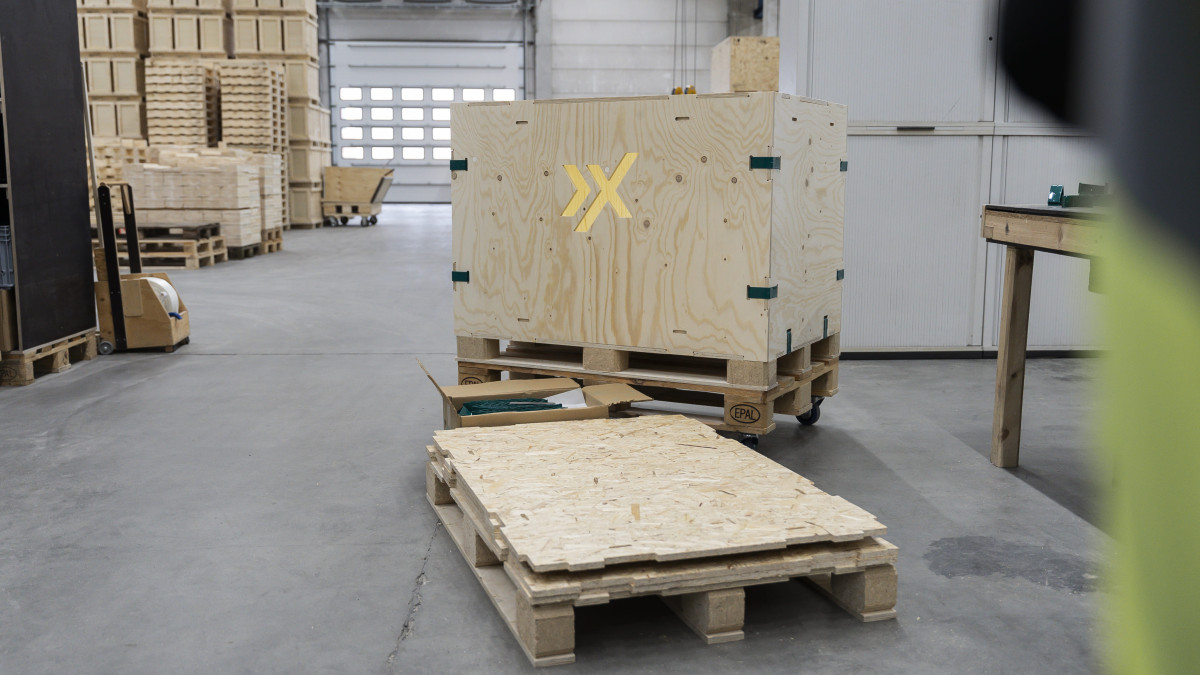
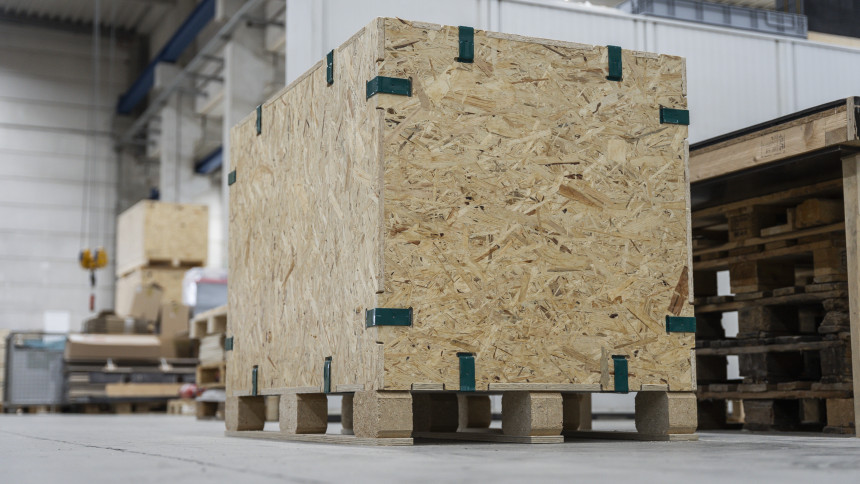
One example is the kliXXkiste from AXXUM. This innovative reusable packaging system was developed specifically for transport and logistics.
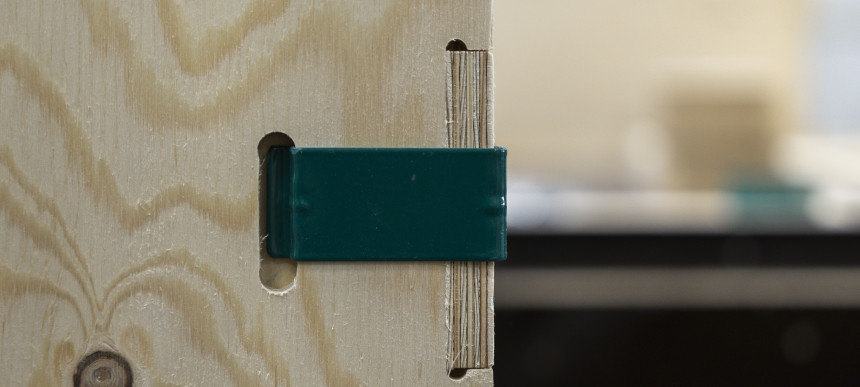
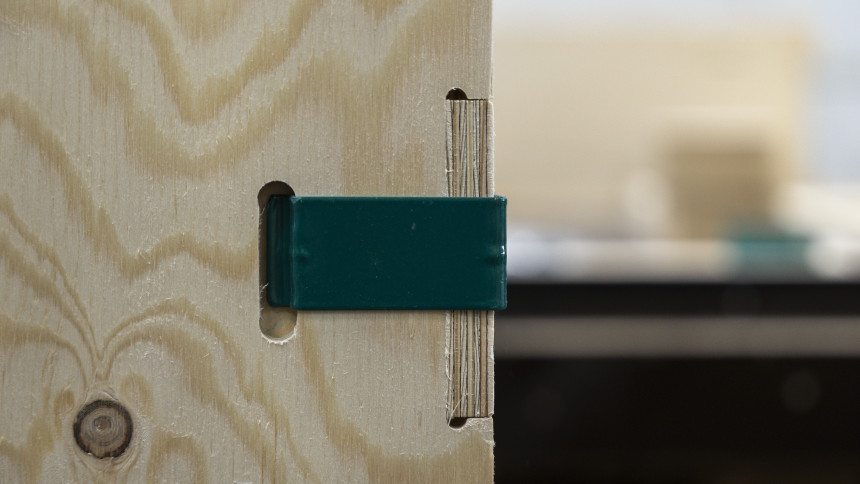
The design requires no nails, screws, or staples. Instead, the components are connected via a clip system. The crate can be assembled without tools and disassembled to save space after use.
This not only reduces material consumption but also significantly decreases storage and transport volumes. Less transport effort also means lower CO₂ emissions.
Recyclable Packaging Concepts
Sustainable packaging should take its future recycling into account right from the development stage.
Materials that can be separated by type make recycling considerably easier. At the same time, valuable raw materials can be recovered and reintroduced into the material cycle.
Benefits of Sustainable Packaging for Businesses
Sustainable packaging solutions offer more than just environmental benefits. Companies can also reap economic benefits.
Lower material consumption often reduces packaging costs. Lighter packaging reduces shipping weights and the associated costs. Reusable systems eliminate recurring procurement expenses for single-use packaging.
In addition, sustainable packaging helps companies achieve their ESG goals and meet the sustainability requirements of customers and business partners.
Last but not least, it enhances transparency within the supply chain and provides reliable data for sustainability reports.
Sustainable Packaging as Part of a Holistic Supply Chain
Sustainable packaging should not be viewed in isolation, but rather as an integral part of the entire supply chain. From the selection of suitable materials to packaging design, transportation, and recycling, every step influences a company’s sustainability performance. Digital solutions create transparency, make processes traceable, and help identify potential savings in material use, transportation, and CO₂ emissions at an early stage.
How AXXUM Helps Companies with Sustainable Packaging Solutions
Sustainability is firmly embedded in AXXUM’s corporate strategy. The company aims to continuously reduce its carbon footprint and is working on innovative packaging solutions for industry and logistics. In 2024, the group’s total CO₂ emissions stood at 2,833 metric tons, significantly below the levels of previous years. Currently, the complete corporate carbon footprint is being calculated, taking into account Scopes 1, 2, and 3, in order to further meet our customers’ requirements.
An important milestone was the development of a certified CO₂ calculator. This tool allows for the transparent determination of emissions associated with a packaging and transport order. Factors taken into account include, among others, the materials used, fasteners, packing materials, as well as logistical factors such as transport distances and fuel consumption.
In addition, AXXUM develops customized packaging concepts for machines, equipment, heavy goods, and industrial components. The goal is to design packaging that is as resource-efficient as possible while remaining as secure as necessary.
Conclusion
Sustainable packaging solutions also work in the industrial sector. Modern materials, smart designs, and innovative reusable systems demonstrate that safety, cost-effectiveness, and sustainability can be successfully combined.
Taking a holistic view of packaging allows companies not only to reduce their material consumption and emissions, but also to create more efficient processes, lower costs, and a solid foundation for their own sustainability strategy.
As a result, packaging evolves from a mere means of transport into a key component of a future-proof and sustainable supply chain.
You Might Also Be Interested In
About the AXXUM Group
With more than 60 locations in seven European countries and 1,300 employees, we offer integrated, high-quality solutions that meet all requirements relating to B2B packaging, contract logistics and the transportation of industrial goods.
AXXUM GroupCareer
Career entry? Change of perspective? Career advancement? No matter what drives you, we would like to offer you something: a stable, future-oriented and motivating working environment, smart benefits and attractive social services.
CareerServices
Our services in the field of packaging and logistics solutions: Packaging, Contract Logistics and Innovation.
Services